Single-Round vs Multi-Round Crash Games: What’s the Difference?
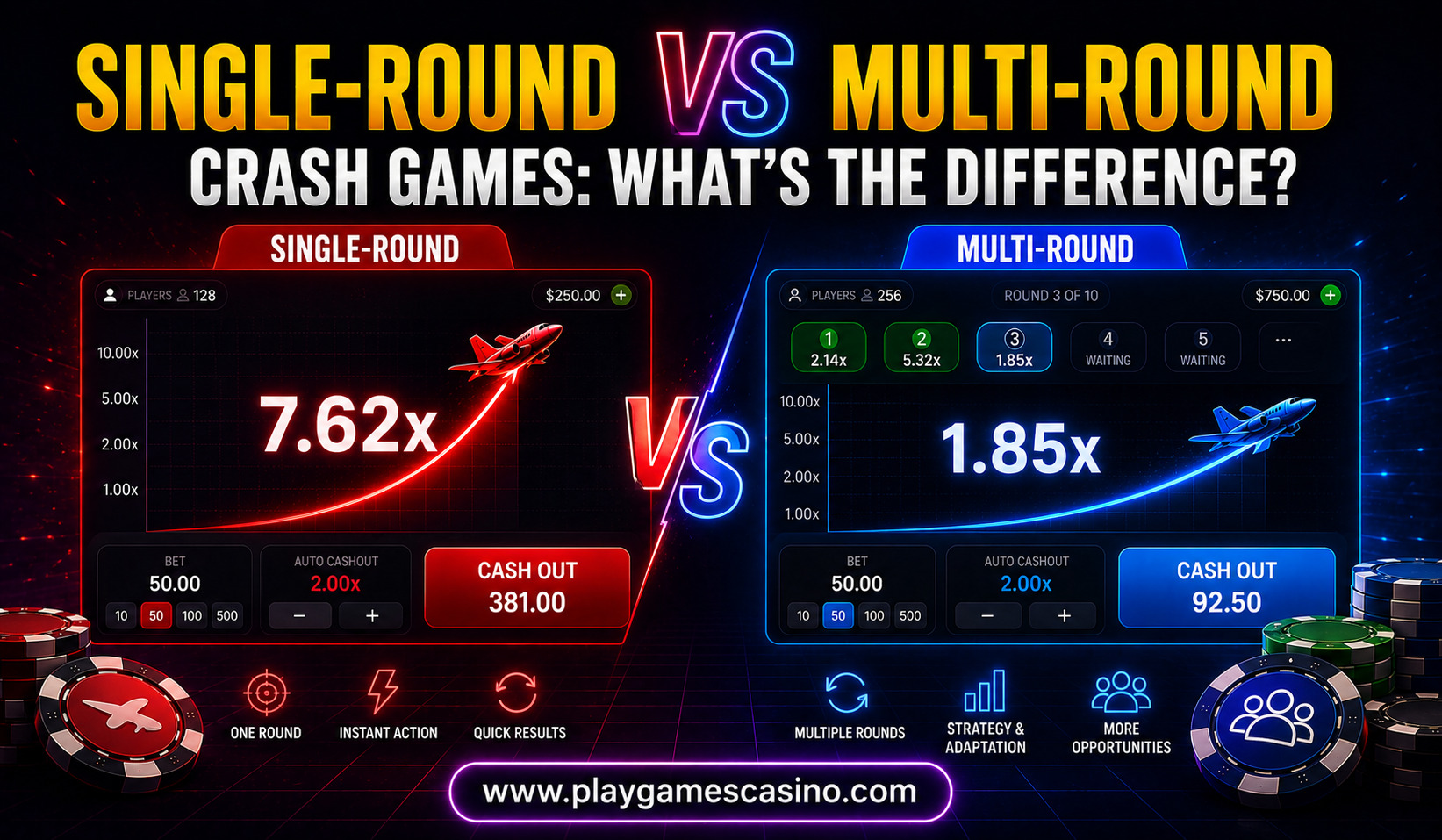
Crash games have become a recognizable part of the modern online gaming landscape, largely because of their simple visual concept and fast-moving rounds. Instead of traditional reels, cards, or game boards, these titles typically revolve around a multiplier that increases during a round and ends at an unpredictable point. Players watch the multiplier rise and, where the game format permits, attempt to exit before the round ends.
While the basic idea may appear similar across different titles, crash games can be structured in different ways. Two broad approaches are single-round and multi-round formats. The distinction is mainly connected to how rounds are organized, how players interact with them, and how information is presented on the interface.
Understanding the difference can help readers recognize why some crash games feel straightforward and others provide a more continuous or layered experience.
What Is a Single-Round Crash Game?
A single-round crash game is structured around one active round at a time. The game begins, the multiplier starts moving, and the round continues until the crash event occurs. Once that round ends, the result is recorded and the next round can begin.
The interface for this format is generally easy to understand. The current multiplier is displayed prominently, while the betting area and other controls remain accessible around the main game window. After the round finishes, the screen transitions toward the next round.
The single-round structure creates a clear beginning, middle, and end. Players can see when one round has finished before focusing on the next. This makes the format relatively accessible to newcomers who are still learning how crash games are presented.
However, simplicity does not mean predictability. The format describes the organization of the game rather than guaranteeing a particular result. The outcome of each round depends on the game’s underlying system and rules.
What Is a Multi-Round Crash Game?
The term multi-round crash game can describe formats where several rounds, betting opportunities, or game cycles are presented within a broader continuous experience. Depending on the specific platform, multiple rounds may follow one another quickly, with the interface providing ongoing information about current and previous activity.
Some games may also allow players to manage more than one position or participate across consecutive rounds without leaving the main game screen. This can make the experience appear more dynamic compared with a simple one-round-at-a-time structure.
The exact meaning of “multi-round” can vary between platforms, so players should always check the individual game’s rules. It does not necessarily mean that several independent crash outcomes are occurring simultaneously.
The Biggest Difference Is Round Structure
The most important distinction is how the game organizes the player’s interaction with rounds.
In a single-round format, attention is concentrated on the active round. Once it ends, the next round begins. In a multi-round environment, the interface may provide a more continuous flow between rounds, giving users additional opportunities to monitor results or prepare for subsequent rounds.
This difference can affect the overall pace of the experience. A single-round interface can feel more segmented, while a multi-round interface may feel more continuous.
Neither structure automatically makes a game better. They are simply different approaches to organizing the same broad crash-game concept.
How the User Interface Changes
Interface design is particularly important because crash games often involve rapidly changing information. A single-round interface can devote most of its attention to the current multiplier, betting controls, and round status.
Multi-round interfaces may need to accommodate additional information. Previous outcomes, upcoming round indicators, multiple betting areas, or other controls can require more screen space.
On mobile devices, this becomes especially important. Developers need to prevent the additional information from making the interface crowded or difficult to navigate.
A well-designed multi-round interface therefore needs a strong visual hierarchy. The current round should remain easy to identify even when other information is displayed.
Single-Round and Multi-Round Formats at a Glance
| Feature | Single-Round Format | Multi-Round Format |
| Primary focus | One active round | Ongoing or connected round activity |
| Interface | Usually simpler | May contain more information |
| Learning curve | Often straightforward | Can require more familiarization |
| Round transition | Clearly separated | May feel more continuous |
| Information density | Lower | Potentially higher |
| Mobile layout | Relatively easy to simplify | Requires careful organization |
| Player interaction | Centered on the current round | May extend across consecutive rounds |
The table provides a general comparison, but individual games can use different mechanics. The name of a format should not be treated as a universal technical standard.
Pace and Player Experience
The pace of a crash game is influenced by more than the game’s mathematical system. Interface design and round organization can also affect how quickly users perceive the experience.
A single-round format creates natural pauses between completed rounds. Those pauses can make it easier to review what happened before the next round begins.
A multi-round setup can provide a more continuous rhythm. Users may see results changing rapidly and move from one round to another with less interruption.
This does not mean that one format necessarily produces better outcomes. It simply changes how information and interaction are organized.
Understanding Round History
Round history is common in crash game interfaces because it allows users to see previous results. In a single-round structure, historical results are often displayed after the active round or alongside it.
Multi-round interfaces may give historical data a more prominent role because several recent rounds can be visible at once. This can help users understand the sequence of previous results.
However, historical information needs to be interpreted correctly. A series of previous multiplier results does not establish what the next round will produce. Each round’s outcome is determined by the rules and technical system used by the particular game.
For this reason, history panels should be considered records of previous events rather than prediction tools.
How Betting Controls Can Differ
Betting controls are another area where the two structures can feel different. In a simple single-round game, the interface may provide one straightforward betting section connected to the upcoming round.
A more complex multi-round environment may provide additional options for managing participation across successive rounds. Depending on the game, this could involve selecting settings before a new round or adjusting available controls between rounds.
The main interface priorities remain clarity and confirmation. Users should be able to understand what amount has been selected, what action is available, and whether the system has accepted their input.
Common design considerations include:
- Clearly labeled controls
- Visible stake information
- Immediate confirmation after interaction
- Easy-to-understand round status
These features are useful regardless of whether the game follows a single-round or multi-round structure.
Mobile Devices Make the Difference More Noticeable
Mobile screens have limited space, making interface structure especially important. A single-round game can generally place the multiplier and essential controls in a compact layout.
A multi-round interface may need to reduce the amount of secondary information displayed at once. Developers can use scrolling sections, expandable panels, tabs, or simplified controls to prevent the screen from becoming overcrowded.
Touch interaction also changes how controls should be designed. Buttons need enough spacing to reduce accidental taps, while essential information should remain readable without excessive zooming.
Performance matters too. Fast animations and real-time updates should be optimized so that the interface remains responsive on different mobile devices.
Which Format Is Easier for Beginners?
For someone unfamiliar with crash games, a single-round structure can often be easier to understand because the sequence is visually straightforward. The user sees one round start, follows its progression, and then sees the round finish.
Multi-round systems may require more attention because there can be additional information or settings to understand. However, a well-designed interface can make the difference much smaller.
The learning curve ultimately depends on the specific game. A simple multi-round interface may be easier to understand than a poorly designed single-round interface.
Players should therefore focus on reading the rules and interface instructions rather than assuming that the format alone determines complexity.
Game Design and Technical Architecture
From a development perspective, the difference between these formats can involve more than what appears on screen. Developers need to coordinate game-state information, user inputs, round timing, result displays, and server-side systems.
A single-round design can have a relatively direct flow: accept eligible inputs, begin the round, update the multiplier, determine the end event, and display the result.
More complex multi-round experiences can require additional state management. The platform may need to keep track of different user actions, display several pieces of round information, and ensure that all interface updates remain synchronized.
Regardless of the format, technical reliability is essential. Delayed or inconsistent information can create confusion and undermine confidence in the platform.
Does Multi-Round Mean More Chances to Win?
Not necessarily. The number of rounds or the way they are presented does not establish the probability of winning a particular outcome.
A multi-round interface may provide more opportunities to participate over time, but each round still has its own outcome according to the game’s underlying rules. More interaction should not automatically be interpreted as a greater likelihood of profit.
The same principle applies to single-round games. A simple interface does not make an outcome more predictable.
What Should Players Compare?
When comparing two crash games, the format is only one factor. Users may also want to examine how clearly the rules are explained, how the interface communicates round status, and what information is available before participating.
Important aspects to examine include:
- Round mechanics: Understand how a round begins and ends.
- Interface clarity: Check whether important information is easy to identify.
- Game rules: Read the specific conditions and available features.
- Financial controls: Understand deposits, withdrawals, limits, and applicable responsible-gaming tools.
These factors provide a more useful basis for comparison than simply choosing between the labels “single-round” and “multi-round.”
Conclusion
Single-round and multi-round crash games share the same broad idea of a multiplier-based round but can deliver noticeably different user experiences. Single-round formats generally place attention on one clearly defined event, while multi-round environments can create a more continuous flow between successive rounds.
The difference is most visible in interface organization, information density, round transitions, and the way users interact with betting controls. Mobile platforms make these design decisions even more important because developers have less screen space to work with.
Ultimately, neither format should be viewed as automatically superior. The more useful approach is to understand the individual game’s rules, interface, technical structure, and applicable financial controls. As crash games continue to evolve, designers are likely to focus on making both simple and complex formats easier to understand, faster to navigate, and more transparent for users.
Frequently Asked Questions
What is a single-round crash game?
A single-round crash game focuses on one active round at a time. The multiplier progresses until the round ends, after which the result is recorded and another round can begin.
What does a multi-round crash game mean?
A multi-round format generally describes an experience organized around consecutive or connected rounds, with the interface allowing users to follow ongoing activity. The exact mechanics depend on the individual game.
Is a single-round game easier to understand?
It can be easier for beginners because the round structure is usually straightforward. However, the actual difficulty depends on the game’s interface and rules.
Are multi-round crash games more profitable?
There is no general basis for saying that a multi-round format is more profitable. The format describes how rounds are organized, not a guaranteed financial outcome.
Can previous crash results predict the next round?
Previous results should not be treated as reliable predictions of future outcomes. Historical results describe earlier rounds and do not, by themselves, determine what happens next.