Mobile Crash Games: How Gameplay Works on Smartphones
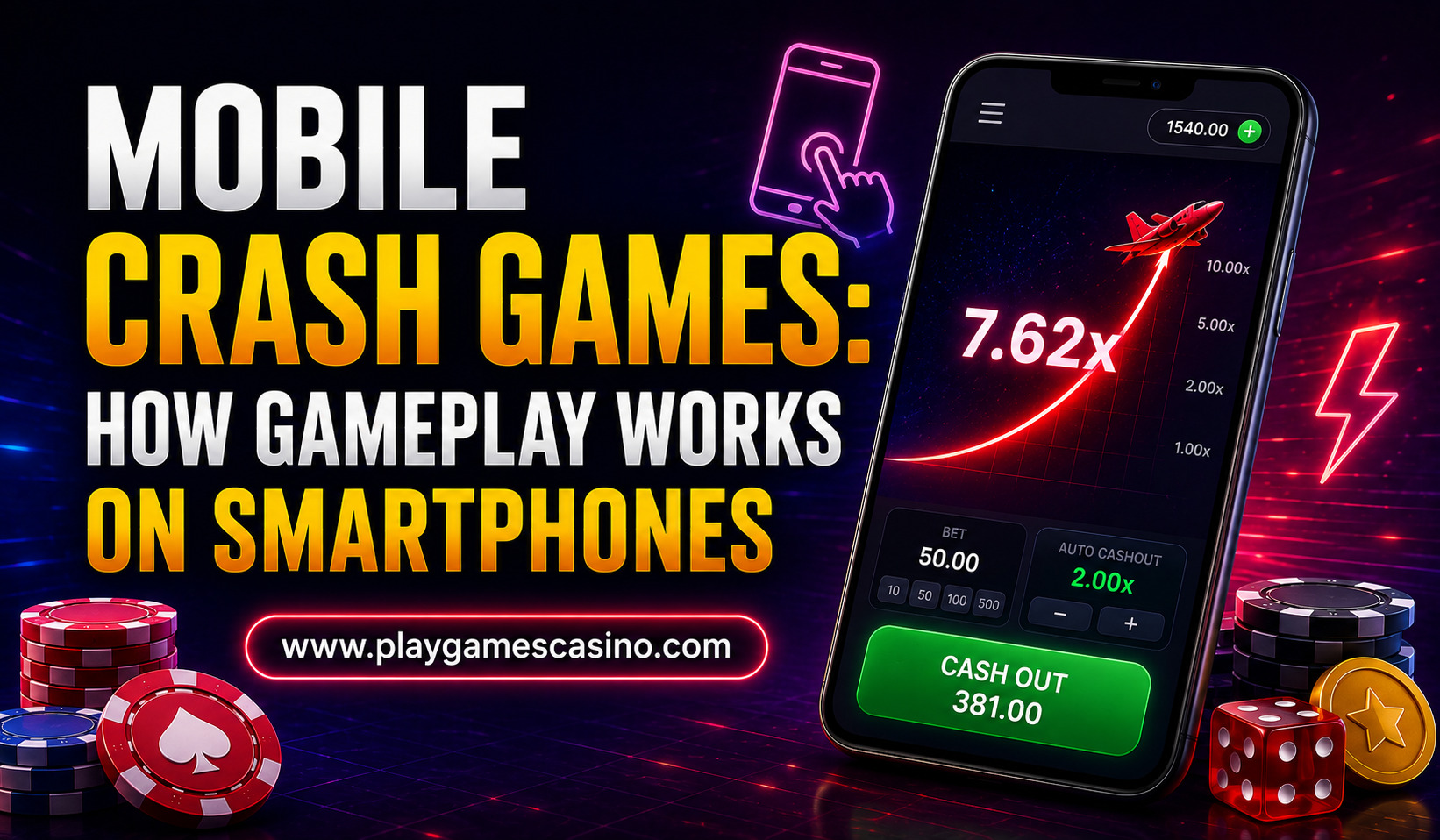
The rapid growth of smartphones has changed how people access online entertainment, including digital casino-style games. Among the formats that have adapted particularly well to mobile devices are crash games. Their simple interface, short rounds and multiplier-based gameplay make them suitable for smaller screens without requiring the complex controls associated with some traditional online games.
Mobile crash games generally follow the same basic concept as their desktop counterparts. A multiplier begins at a low value, rises during a live round and eventually stops at an unpredictable point. Players can attempt to cash out before the round ends, with the potential return determined by the multiplier at the time of a successful exit.
However, moving a crash game to a smartphone involves more than simply shrinking a desktop interface. Developers must consider touch controls, screen size, connection quality, loading performance, notifications and real-time synchronization. These factors influence how the gameplay is presented and how users interact with the game.
What Are Mobile Crash Games?
Mobile crash games are crash-style games designed to work on smartphones and, in many cases, tablets. They can be accessed through mobile browsers, dedicated gaming applications or responsive versions of online platforms.
The central gameplay remains straightforward. A player places a wager, the multiplier begins to increase and the player decides when to cash out. If the round ends before the player successfully exits, the wager may be lost according to the game’s rules.
What makes the mobile format different is the way this experience is delivered through a touchscreen. Buttons, charts, multiplier displays and betting controls must all remain visible and usable on a relatively small screen.
How a Mobile Crash Game Round Works
A typical mobile crash-game round begins before the multiplier starts moving. The player selects a wager and, depending on the platform, may choose a cash-out target or prepare an automatic cash-out setting.
Once the round begins, the multiplier starts increasing. The player can watch the number rise and decide whether to cash out manually.
For example, a player might place ₹200 and cash out successfully at 1.80x. The applicable return would be based on that multiplier and the game’s payout rules.
If the game crashes at 1.65x before the player’s cash-out is successfully processed, the result may be different. The exact settlement depends on the platform’s rules.
The mobile interface therefore needs to communicate several pieces of information simultaneously without making the screen difficult to use.
Why Crash Games Fit Smartphones
Crash games have several characteristics that make them naturally adaptable to mobile devices.
Unlike games that require a large virtual table, numerous cards or extensive menus, a crash game can focus on a small number of essential elements. The multiplier, wager amount and cash-out controls are usually the most important parts of the interface.
The format also works well with short sessions. A user does not necessarily need to spend a long period learning complicated rules before understanding the basic mechanic.
This combination of simplicity and short rounds has helped crash games become increasingly visible across mobile gaming platforms.
The Mobile Interface
A well-designed mobile crash game generally prioritizes the information needed during a live round.
The central area of the screen is often dedicated to the multiplier or game animation. Betting controls and cash-out buttons are positioned where they can be reached easily with a thumb.
A responsive interface may adjust the arrangement of these elements depending on the device’s screen size.
| Mobile Element | Purpose |
| Multiplier display | Shows the current round multiplier |
| Bet controls | Allows users to enter or select a wager |
| Cash-out button | Lets users exit an active wager |
| Auto-cashout setting | Automates an exit at a selected multiplier |
| Round history | Displays previous results where available |
| Balance display | Shows account or wager information |
The exact layout varies between providers, but the objective is generally the same: provide the necessary information without overcrowding the screen.
Touch Controls Change the Experience
Touchscreens create a different interaction model from a desktop mouse and keyboard.
On a computer, users can move a cursor precisely over a button. On a smartphone, controls must be large enough to tap comfortably without accidentally selecting another option.
This is particularly important during fast-moving crash rounds. If the cash-out button is too small or placed too close to another control, users may find the interface difficult to operate.
Mobile developers therefore pay considerable attention to button placement, spacing, visual feedback and screen responsiveness.
A successful tap should also provide clear confirmation so the player can understand whether the cash-out instruction was registered.
Manual Cashout on Mobile
Manual cashout is one of the main interactions in mobile crash games.
As the multiplier rises, the player can tap the cash-out button when they decide to exit. The applicable payout is then calculated using the multiplier at which the cash-out is successfully processed, subject to the game’s rules.
The fast nature of the game makes mobile responsiveness important. However, players should not assume that pressing a button guarantees a particular multiplier. Server processing, connection conditions and the game’s settlement mechanism can influence how cash-out requests are handled.
For this reason, users should read the specific platform’s rules concerning cash-out timing.
Auto Cashout on Smartphones
Many crash games also offer auto cashout.
This feature allows a player to select a multiplier target in advance. If the round reaches that level before crashing, the system attempts to process the automatic cash-out according to the game’s rules.
For example, a player might select 2.00x as an automatic target. If the round reaches 2.00x successfully, the automatic instruction may execute without requiring the player to tap the screen.
Auto cashout can be especially convenient on smartphones because it reduces the need for precise touchscreen interaction during a rapidly changing round.
However, it does not guarantee that the target will be reached. If the round ends below the selected multiplier, the auto-cashout instruction cannot produce the intended target payout.
Mobile Internet and Real-Time Gameplay
Crash games depend on real-time communication between the player’s device and the game platform.
Smartphones may connect through Wi-Fi, 4G, 5G or other mobile networks. Connection quality can vary depending on location, network congestion and signal strength.
A strong and stable connection generally provides a smoother experience, while interruptions can cause delays in loading or displaying information.
It is important to distinguish between what appears on the screen and what has been officially processed by the game’s server. The platform’s rules determine how wagers and cash-out requests are recorded.
Players should therefore avoid assuming that a temporary display issue automatically changes the official result.
Mobile Browser vs Dedicated App
Crash games may be available through mobile browsers or dedicated applications, depending on the platform.
A mobile browser does not necessarily require an installation. Users can access a responsive website directly, provided the service supports mobile browsers.
Dedicated applications can offer a more controlled environment and may provide additional interface features, notifications or device integration.
| Feature | Mobile Browser | Dedicated App |
| Installation | Usually not required | Required |
| Updates | Generally handled by website | App updates may be required |
| Accessibility | Easy through browser | Requires installed application |
| Device integration | More limited | Can offer deeper integration |
| Storage | Usually lower | Requires device storage |
Neither format automatically makes the underlying game more predictable or safer. The important factors remain the game’s rules, operator practices and technical implementation.
How Mobile Graphics Are Optimized
A crash game’s graphics must be designed around smartphone hardware.
Developers often need to balance animation quality with loading speed and battery consumption. Excessively complex graphics can slow down older devices or increase data usage.
The multiplier itself is usually the most important visual element, meaning the game can remain understandable even when other animations are simplified.
Modern smartphones with stronger processors and high-refresh-rate displays can provide smoother animations, but the underlying game result does not depend on how visually impressive the interface is.
Why Loading Speed Matters
Mobile users often expect websites and applications to respond quickly.
A crash game that takes too long to load may provide a poor experience, particularly when players expect short, real-time rounds.
Developers therefore optimize images, scripts, animations and other resources to reduce unnecessary loading time.
This is especially relevant for users on mobile data connections, where network speed and data limits can vary.
However, faster loading does not change the game’s mathematical outcome. It only affects how efficiently the user can access the interface.
How RTP and Volatility Apply to Mobile Crash Games
The fact that a game is played on a smartphone does not normally change its underlying RTP or volatility.
RTP, or Return to Player, describes the theoretical long-term return of the game. Volatility describes how much outcomes can vary.
These characteristics belong to the game’s mathematical model rather than the device being used.
A player using a smartphone and another using a desktop computer may therefore be interacting with the same mathematical game, assuming they are accessing the same version and conditions.
The mobile device changes the interface, not necessarily the underlying probability system.
Final Thoughts
Mobile crash games have adapted a simple multiplier-based format to the touchscreen environment. Their short rounds, limited controls and visually straightforward design make them particularly suitable for smartphones.
The basic gameplay remains the same: a multiplier rises, players decide when to cash out, and the round ends at an unpredictable point. What changes on mobile is the way users interact with that process.
Touch controls, responsive layouts, mobile networks, browser technology and dedicated applications all contribute to the overall experience. Features such as auto cashout can make interaction easier, while mobile optimization can improve performance on smaller screens.
However, smartphone technology does not turn crash games into predictable systems. RTP, volatility and crash outcomes are determined by the game’s underlying mathematical and technical design rather than by the device being used.
For users, understanding both the technology and the risks is essential. A mobile interface may make crash games convenient to access, but convenience should always be balanced with responsible spending and realistic expectations.
Frequently Asked Questions
What are mobile crash games?
Mobile crash games are crash-style online games designed for smartphones and tablets. They typically feature a rising multiplier and a cash-out mechanic.
How does a crash game work on a smartphone?
A player selects a wager, watches the multiplier rise and can attempt to cash out before the round ends. The mobile version uses touchscreen controls to provide the same core gameplay.
Can I play crash games through a mobile browser?
That depends on the platform. Many crash games are designed to work through responsive mobile websites, while some may also offer dedicated applications.
Does a faster phone improve the chances of winning?
No. A faster smartphone may improve interface performance or animation smoothness, but it should not change the mathematical probability of the game outcome.
Does internet speed affect the crash point?
Internet speed should not determine the underlying crash point. However, connection quality can affect communication between the device and platform, particularly when processing real-time actions.